
How to Prepare for a Regulation CF Raise: A Founder's Checklist
What should be in place before you begin a capital raise? Building a foundation for a capital raise starts with more than a pitch deck. Company information may be scattered and priorities unclear. Preparation calls for organized materials, clear ownership, and a review process the team can follow.
This guide lays out a practical sequence for preparing your company, materials, and workflow for a Regulation CF or Regulation A+ raise. You’ll learn how to organize key information, coordinate internal work with your registered intermediary, and identify decisions that belong with qualified securities counsel. The goal is a clear process, not a promised outcome.
Pre-IPO Hype is investor relations infrastructure for Regulation CF and Regulation A+ raises. We are not a broker-dealer, funding portal, or investment adviser, and we do not offer, sell or recommend securities. This article is educational only and is not legal or investment advice. Pre-IPO Hype fees are never tied to investment results. Our role is campaign support alongside the issuer’s registered intermediary and qualified securities counsel. Results vary. No marketing approach guarantees that a raise will close.
Key Takeaways
- Building a foundation for a capital raise starts with organized preparation, not a promise of funding.
- Separate company readiness, offering review, and investor communications so each workstream has clear ownership.
- Align goals, gather company information, assign owners, and organize materials before coordinating review.
- Start with a manageable workflow, then add coordination as the team’s needs develop.
- Coordinate campaign communications for the issuer alongside its registered intermediary, and direct legal decisions to qualified securities counsel.
What does building a foundation for a capital raise actually involve?
A founder preparing for a Regulation CF or Regulation A+ raise may have a deck, financial records, and conversations underway, yet still be unsure what needs attention first. Building a foundation for a capital raise means organizing company information, materials, responsibilities, and review. It is preparation for a securities offering, not a promise of funding.
Readiness has several connected but distinct workstreams. Company readiness concerns whether business information and internal materials are organized. Offering review concerns the offering process and disclosure, with legal decisions directed to qualified securities counsel. Investor communications concern how the issuer shares consistent information through appropriate channels.
These workstreams need coordination, but they should not be confused. A founder may own the business narrative, while finance staff organize company records and a designated communications lead manages approved materials. Counsel handles legal decisions, and the issuer coordinates with its registered intermediary on the offering process. Clear ownership helps prevent duplicate drafts, unanswered questions, and conflicting versions from circulating.
What belongs in a capital-raise foundation?
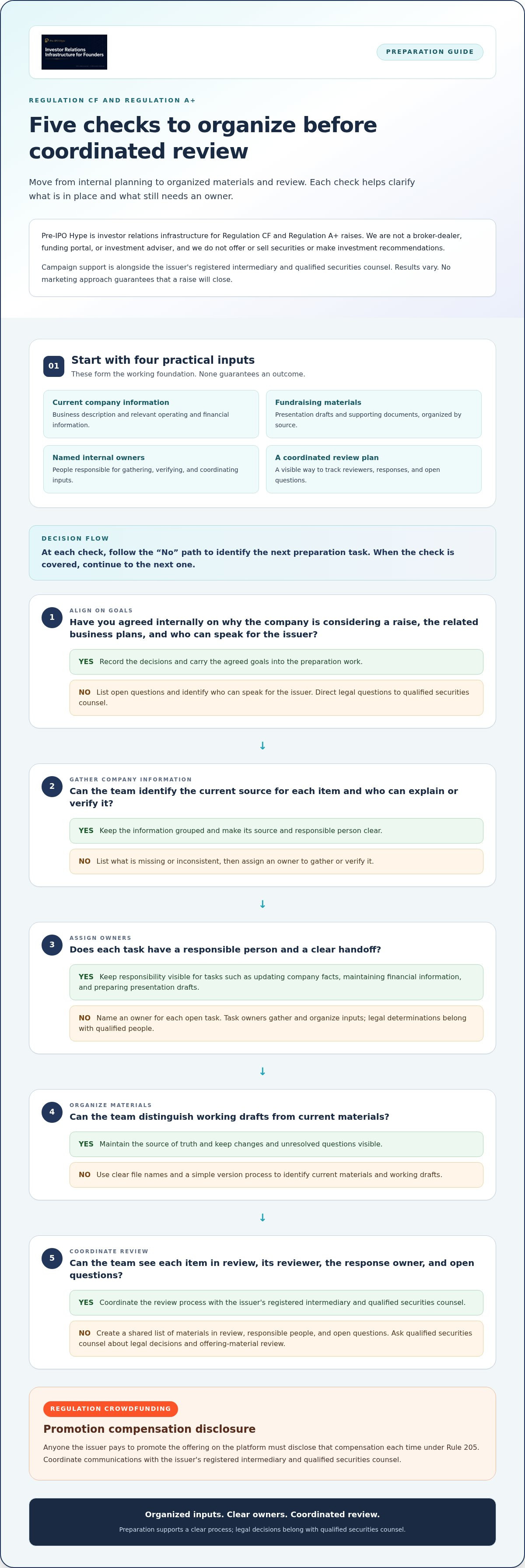
Start with four practical inputs: current company information, fundraising materials, named internal owners, and a plan for coordinated review. These might include the company’s business description, financial information, presentation, and supporting documents. Keep source materials organized so reviewers can identify what is current and who can address questions. These inputs support preparation; none guarantees an outcome.
Readiness is different from investor interest
Early conversations can help founders hear questions, but they don’t establish that an offering is prepared. Interest is not a substitute for organized company information, reviewed materials, or a clear communications process. A polished presentation alone does not establish readiness either. It may describe the opportunity clearly while leaving company records, review responsibilities, or disclosure questions unresolved.
For Regulation Crowdfunding, anyone the issuer pays to promote the offering on the platform must disclose that compensation each time under Rule 205. Coordinate communications with the issuer’s registered intermediary and qualified securities counsel, and direct legal questions to counsel.
A useful first step is to list existing materials, identify what is missing or inconsistent, and assign an owner to each open task. Record who is responsible for gathering information, who can verify business facts, and who coordinates review. This makes preparation easier to track without suggesting that demand, momentum, or a particular result is assured.
How to prepare your company, materials, and decisions for a capital raise
A clear sequence helps founders turn preparation into manageable work. For a Regulation CF or Regulation A+ raise, keep internal planning distinct from legal decisions and coordination with the registered intermediary. Building a foundation for a capital raise means collecting, assigning, and reviewing information, not assuming every question has one standard answer.
- Align on goals. Agree internally on why the company is considering a raise, which business plans it relates to, and who can speak for the issuer. Record decisions and open questions, but leave legal questions to qualified securities counsel.
- Gather company information. Collect relevant business, operating, and financial information in a shared, organized location. Include the current source for each item and note who can explain or verify it. Counsel can advise which information and offering materials need review for the company’s circumstances.
- Assign owners. Name a responsible person for each task, such as updating company facts, maintaining financial information, preparing presentation drafts, or coordinating review. Make handoffs clear: task owners gather and organize inputs, but do not make legal determinations unless qualified to do so.
- Organize materials. Use clear file names and a simple version process so the team can distinguish working drafts from current materials. Record changes and unresolved questions. This helps reviewers avoid relying on an outdated company description or figures.
- Coordinate review. Maintain a shared list of materials in review, the person responsible for each response, and open questions. Ask qualified securities counsel to guide legal decisions and offering-material review. Coordinate the process with the issuer’s registered intermediary without assuming that the intermediary replaces counsel or makes the issuer’s business decisions.
Gather and organize company information
Build a practical inventory rather than assuming a universal checklist applies. For example, group current operating information, financial records, company descriptions, and presentation drafts, then label each item with an owner and update status. Avoid circulating separate versions without a clear source of truth. Which materials require legal review depends on the offering and the issuer’s circumstances, so take those questions to qualified securities counsel.
Coordinate materials with counsel and the intermediary
Make review visible with a tracker that records each item, reviewer, open question, and next owner. Keep operational edits separate from legal comments so changes can be routed to the right person. Counsel should address legal decisions and offering-material review; the registered intermediary participates in the offering process. The issuer remains responsible for coordinating accurate company information and communications.
The technical layer should support this workflow, not obscure it. The system for organizing investor relations activity can be simple or more coordinated depending on the issuer’s needs. The fundraising infrastructure overview explains how the technical layer fits into the broader process.
Once owners, materials, and review questions are mapped, founders can see where internal work ends and specialized review begins. If a conversation about your preparation workflow would help clarify next steps, you can schedule a discussion about raise preparation.
A capital raise foundation does not require a perfect pitch deck or complex stack
Preparation doesn’t have to begin with polished materials or specialized technology. A usable first version of a presentation and a clear way to manage company information may be enough to identify gaps and coordinate the work. Choose a level of structure that fits the team’s responsibilities and materials, rather than assuming a particular tool creates investor interest.
Compare approaches by asking four practical questions: Can the team find current information? Is an owner clear for each task? Can people distinguish current materials from drafts? Does the process fit how the team works?
Compare preparation approaches by the work they solve
A spreadsheet and shared folder can provide a straightforward starting point. A more coordinated workflow may make responsibilities and document status easier to follow as the team’s process develops. Neither option is right for every issuer. Consider the tradeoffs:
- Fragmented approach: Materials sit across individual inboxes, folders, and devices. Team members may find their own files, but it can be harder to see which version is current or who owns an open task.
- Basic organized workflow: A shared folder holds working materials, while a simple tracker records the owner and status of each item. This can help a small team make progress without adding a complex system. Clear file names and agreed editing practices still matter.
- More coordinated system: A central workflow brings tasks, materials, and review status into a more consistent process. This can be useful when several people manage different materials or updates need to be tracked across multiple workstreams. It also takes time to set up and maintain.
Use an approach that gives your team adequate clarity and version control without creating more administration than the work requires. For example, if one person manages the current deck and another updates company information, a basic tracker can show who owns each item and whether it is a draft or ready for review. If several contributors edit or hand off materials, agree on a single source of truth and a consistent way to log changes.
Choose a workflow that fits the issuer’s stage
Match the process to actual needs. A team with few contributors and a manageable set of materials may start with shared folders, clear naming, and a task list. As responsibilities or document volume grow, a more coordinated system may make handoffs and status easier to monitor. Refine the workflow when a real coordination problem appears, rather than adding complexity in anticipation of one.
The technical layer should serve the preparation process. A fundraising tech stack can be considered in relation to the tasks the issuer needs to organize, but technology alone doesn’t resolve unclear ownership, inconsistent company claims, or open review questions. Choose tools based on fit with the team’s process, and keep responsibilities clear.
There is no level of polish that makes a company prepared by itself. A presentation can evolve; the more useful early standard is a workflow that helps the team locate current materials, identify owners, and keep changes visible.
How to sequence preparation and communications for a Regulation CF or Regulation A+ raise
Communications work best when they follow a clear review process. For either a Regulation CF or Regulation A+ raise, the issuer can move from internal alignment to organized materials, coordinated review, and then communications managed for the issuer. This sequence helps the team identify what is ready to share, what needs attention, and who owns each next step.
Build a clear internal workflow before communications begin
Before outreach begins, map the people and handoffs involved. Assign owners for company inputs, materials, review questions, and issuer communications. Keep a record of edits and open questions that relevant team members can access. Coordinate communications with the issuer’s registered intermediary and qualified securities counsel, while keeping legal decisions with counsel.
- Align internally. Confirm the company’s goals for the raise, the intended audience for its communications, and who is authorized to speak for the issuer. Keep business facts consistent across the presentation, written materials, and other issuer communications.
- Prepare the working materials. Gather current company information and identify which materials are ready for review and which remain drafts. Use a shared tracker to record owners, versions, questions, and each item’s status.
- Coordinate review. Route legal questions and offering-material review to qualified securities counsel. Coordinate the offering workflow with the issuer’s registered intermediary. Track questions and responses so changes can be considered in context.
- Plan communications for the issuer. Once relevant materials and communications have been reviewed, coordinate campaign activity and outreach for the issuer with the registered intermediary and qualified securities counsel. Keep communications aligned with information shared through the issuer’s offering process.
- Maintain the workflow. When materials or company information change, update the working versions, note what changed, and bring unresolved questions to the appropriate owner before using those materials again.
This isn’t a substitute for decisions by counsel or the intermediary. It is a way to make the issuer’s internal responsibilities and handoffs easier to follow. If a question has legal implications, direct it to qualified securities counsel rather than trying to settle it through an internal edit.
Handle paid Regulation Crowdfunding promotion transparently
For paid promotion of a Regulation Crowdfunding offering on the platform, apply the Rule 205 compensation-disclosure requirement described above. Keep that requirement in view when planning outreach done for the issuer, and coordinate related questions with qualified securities counsel.
A workflow conversation can focus on who owns each handoff, how changes are recorded, and where communications fit alongside review. Learn more about a fundraising workflow conversation.
Turn capital-raise preparation into a coordinated next step
Preparation becomes more manageable when open work is visible and someone owns each next step. Before moving forward, identify gaps in company information and materials, assign responsible owners, organize current versions, and coordinate review. This gives the issuer a practical view of what is ready, what remains unresolved, and which questions need qualified securities counsel.
What a founder can take into a workflow conversation
A useful conversation can start with the intended offering type, whether Regulation CF or Regulation A+, a high-level view of preparation so far, and questions about how the team coordinates its work. For example, founders might note that company materials are spread across different folders or review questions lack a clear owner. You don’t need to treat the conversation as a formal intake or share confidential information.
Our Custom Investor CRM supports lead scoring and attribution tracking.
Campaign support is alongside the issuer’s registered intermediary and qualified securities counsel. Keep those roles clear: campaign support does not replace legal review or the registered intermediary’s role in the offering. Legal decisions belong with qualified securities counsel.
For context on investor relations and campaign support, see the company’s overview of its work.
Keep support within the right boundaries
A workflow discussion can help clarify how company materials, internal responsibilities, and campaign communications fit together. It should not be treated as investment advice, securities sales, or a promise of a funding outcome. Founders can use it to make practical questions easier to discuss, while directing legal decisions to counsel and coordinating offering matters with the registered intermediary.
Building a foundation for a capital raise is a deliberate process, not a test of whether every document is already perfect. Start with the gaps your team can identify, clarify who owns each task, and keep review questions visible as preparation continues.
Carry preparation forward with a clear next step
The next useful move is to turn preparation into a working rhythm your team can maintain. Building a foundation for a capital raise is not a one-time document exercise. It is a way to keep decisions, material updates, and review responsibilities connected as the company progresses. Choose one open item to move forward, then make its owner and next handoff visible.
Keep the workflow adaptable. It should reflect the issuer’s actual responsibilities and make it easier to recognize when a question needs qualified securities counsel or coordination with the registered intermediary. If the next step feels unclear, a focused conversation can help map the work without treating preparation as a forecast of the offering’s outcome.
To discuss how your team can organize its next steps, schedule a fundraising workflow conversation. A clear, manageable process is a practical place to continue.
Frequently Asked Questions
Is a data room required for every capital raise?
No, a formal data room isn’t automatically required as the first step in every raise. Founders can begin by organizing company records in a controlled shared folder, then adjust the format as review needs become clearer. The important question is whether relevant people can locate current materials and track changes. Ask qualified securities counsel which records and review arrangements are appropriate for the issuer’s offering.
Can founders prepare while qualified securities counsel reviews offering materials?
Yes. Internal preparation can continue in parallel, provided the team keeps draft and reviewed materials distinct. For example, a finance lead can update source records while counsel reviews offering materials, with a designated owner tracking questions and changes. Don’t treat internal edits as legal clearance. Route decisions about legal language or whether a change affects offering materials to qualified securities counsel.
What happens if the company's plans change during preparation?
Record the change, identify which company information or materials it affects, and tell the relevant owners before using older versions. A shift in product plans, operations, or business priorities may affect how the issuer describes its plans. Keep prior and updated versions identifiable so reviewers can understand what changed. Ask qualified securities counsel whether the change raises legal or offering-related questions.
How much historical financial information should founders gather?
Begin by locating the financial records the company already maintains and note the period each record covers. Don’t assume that one standard number of years or one format applies to every issuer or offering. The appropriate financial information and any related requirements depend on the offering and company circumstances. Qualified securities counsel can help clarify what needs to be prepared or reviewed before materials are finalized.
Is investor interest enough to show that a raise is ready?
No. Expressions of interest can tell a company what questions people have, but they don’t establish that its materials, review process, or communications are ready. Building a foundation for a capital raise requires assessing preparation separately from interest. For example, a founder can record recurring questions as topics to review without presenting those conversations as evidence of demand or treating them as a substitute for counsel’s review.
Can offering communications be revised after a campaign begins?
Changes may be possible, but don’t assume an issuer can update communications informally once a campaign is underway. First identify what has changed and which materials or messages it affects. Coordinate the proposed revision with the issuer’s registered intermediary and qualified securities counsel before using it. They can address the appropriate review and process for the specific offering; avoid circulating inconsistent versions while questions are unresolved.
Can a founder discuss a planned raise publicly before launch?
That depends on the offering type, timing, content, and applicable requirements, so founders should consult qualified securities counsel before making public statements about a planned raise. Regulation A+ has a testing-the-waters option, but whether and how to use it depends on the applicable rules and the issuer’s circumstances. Coordinate communications with counsel and the registered intermediary rather than assuming that a general company update is suitable offering communication.
Disclaimer
Educational only. Not investment, tax, or legal advice. Pre-IPO Hype is investor relations infrastructure for Regulation CF and Regulation A+ raises. We are not a broker-dealer, funding portal, or investment adviser, and we do not offer or sell securities or make investment recommendations. Any securities offering is made only by the issuer, through its own offering documents and, where required, a registered intermediary.


