
How to Market Your Equity Crowdfunding Campaign: A Founder's Guide
How do you market an equity crowdfunding campaign without letting enthusiasm turn into claims you cannot support? Founders preparing a Regulation CF or Regulation A+ raise usually have more possible channels than time: their own email list and website, social posts, press and newsletter outreach, paid placements, and personal introductions from supporters. Learning how to market your equity crowdfunding campaign starts with a plan that decides which channels to use, who reviews each message, and where investors go for offering information.
This guide sets out a practical channel plan for an equity crowdfunding campaign, then goes deep on one of the channels founders rely on most and handle least consistently: referrals and introductions from people who already know the company. A personal introduction is not the same as paid promotion. For Regulation Crowdfunding, anyone the issuer pays to promote the offering on the platform must disclose that compensation each time under Rule 205.
You will find how to sequence campaign marketing around the offering, how to keep every channel pointing to the issuer’s registered intermediary or offering page, and how to run a permission-first referral workflow that protects relationships. Results vary. No marketing approach guarantees that a raise will close.
Key Takeaways
- Market your equity crowdfunding campaign from a written channel plan that covers owned, earned, paid and referral activity.
- Route every channel to the issuer’s registered intermediary or offering page for offering information.
- Run all campaign messages through the issuer’s review process and qualified securities counsel before use.
- Treat referrals as a permission-first channel: supporters decide whether to make an introduction.
- Distinguish unpaid personal introductions from issuer communications and paid promotion, which carries Rule 205 disclosure.
How to market your equity crowdfunding campaign: start with a channel plan
Begin with the offering, not the channels. Confirm with the issuer’s registered intermediary and qualified securities counsel what can be said, when, and where, then choose the channels that can carry approved messages consistently. Every channel should send people who want offering details to the issuer’s offering page, and every message should be factual, reviewed and free of return predictions.
A simple plan for an equity crowdfunding campaign covers four kinds of activity:
| Channel | What it includes | Practical handling |
|---|---|---|
| Owned | The company’s email list, website, blog and social accounts | For Regulation CF, posts outside the intermediary platform are limited to tombstone style notice content under Rule 204, such as the offering terms, the intermediary name and a link to the offering page. Send people to the offering page for anything more. |
| Earned | Press, podcasts and investment newsletters that choose to cover the company | Pitch verifiable facts; the publisher controls the story. |
| Paid | Ads, sponsored placements and paid promoters | Label it as paid; for Regulation CF, paid promoters must disclose compensation under Rule 205. Ask counsel about each arrangement. |
| Referrals | Personal introductions from customers, advisors and supporters | Keep requests optional and route offering questions to the intermediary or offering page. |
Sequence campaign marketing around the offering
Map activity to the stages of the raise. Before launch, prepare and review materials, organize contact records and confirm what communications are allowed at that stage. At launch, use owned channels to tell existing supporters where the offering page is. During the campaign, keep updates factual and consistent across channels, and correct anything that turns out to be inaccurate. Near the close, avoid urgency claims you cannot support. After the campaign, keep communicating with investors through the issuer’s established process.
Assign owners and a review step
Give each channel an owner on the issuer team and one review path for messages, so nothing goes out that counsel or the intermediary has not seen when review is needed. Track activity to understand what is working operationally, but do not treat clicks, opens or introductions as evidence of investment intent. The rest of this guide shows how to run the referral channel with the same discipline.
Why referrals need a clear process in your campaign marketing
During a fundraising campaign, an investor referral should mean a voluntary, relevant introduction between a founder and someone who may want to learn about the company. It is not a promise that the contact is interested, eligible to invest, or likely to invest. Nor does a referral predict the campaign’s outcome. Keeping these distinctions clear helps prevent a personal connection from being mistaken for an endorsement or commitment.
Give supporters enough context to decide whether making an introduction makes sense. Explain why the person may find a conversation relevant, and leave room for the supporter to decline. Keep offering information and investment decisions within the issuer’s appropriate channels, such as its registered intermediary or offering page. This separation matters during both Regulation CF and Regulation A+ raises.
Think of a referral as an invitation to a conversation, not a shortcut around the issuer’s communications process. An Angel Investor may be one kind of early-stage contact, but a title alone does not establish that someone is interested in or suitable for a particular offering.
What counts as an investor referral in a founder-led process?
A founder-led referral begins when a willing supporter connects you with a potentially relevant contact, ideally after both people have agreed to the introduction. The supporter is not being asked to speak for the issuer, assess the offering, or predict its outcome. A warm handoff can open a dialogue, but it does not confirm the recipient’s interest, eligibility, or investment intent.
After the introduction, keep everyone’s roles clear. The founder can explain the company and direct offering questions to the issuer’s registered intermediary or offering page. Do not treat an introduction as permission to assume interest or send repeated messages. For legal decisions about offering communications, consult qualified securities counsel.
Why trust and timing matter when making the request
Approach people who know your company well enough to decide whether an introduction makes sense. A conversation about your raise may create a natural moment to ask, but the request should be specific and optional. Explain why a particular contact’s experience might make a conversation relevant, then ask whether the supporter is comfortable connecting you.
Respect the answer. A no, a pause, or no response is a reason to leave the choice with the supporter, not to keep pressing. Protecting the relationship matters more than obtaining any single introduction. Keep personal referrals distinct from broader offering promotion. For Regulation Crowdfunding, anyone the issuer pays to promote the offering on the platform must disclose that compensation each time under Rule 205. Consult qualified securities counsel about legal questions.
How to build a responsible referral workflow for your campaign
A referral workflow is a documented sequence for managing an introduction request, from identifying the context to recording the outcome and following up. It gives the issuer a consistent way to coordinate introductions without placing the burden on supporters or confusing a personal connection with offering communications.
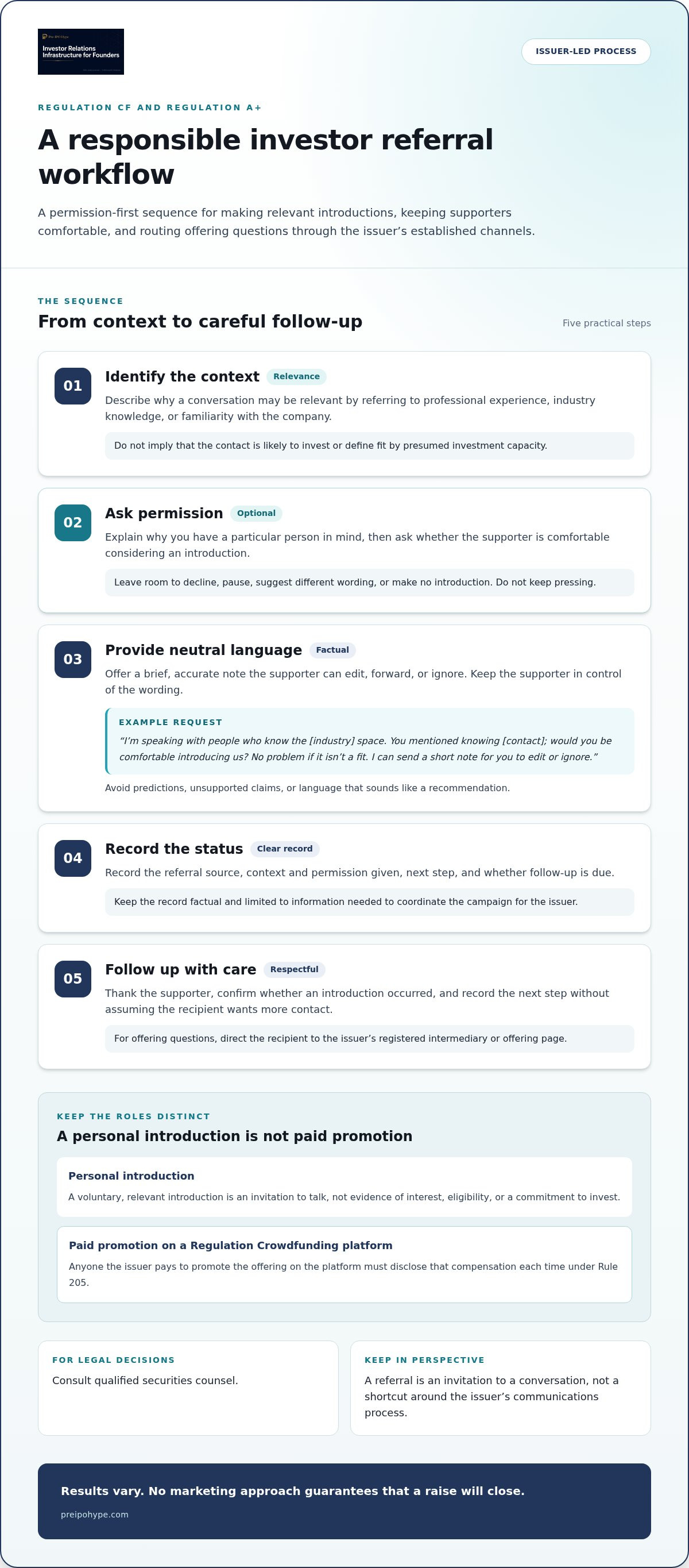
Use this issuer-led sequence as a practical starting point:
- Identify the context. Describe the kind of contact who may find a conversation relevant by referring to professional experience, industry knowledge, or familiarity with the company. Do not define fit by presumed investment capacity or imply that the contact is likely to invest.
- Ask permission. Tell the supporter why you have a particular person in mind, then ask whether they are comfortable considering an introduction. They can decline, make no introduction, or suggest different wording.
- Provide neutral language. Offer a brief, factual note they can edit or choose to forward. Include a plain description of the company and a way for the recipient to reach the issuer. Avoid predictions, unsupported claims, or language that sounds like a recommendation.
- Record the status. Note the referral source, the context and permission given, the next step, and whether follow-up is due. Keep the record factual and limited to information needed to coordinate the campaign for the issuer.
- Follow up with care. Thank the supporter, confirm whether an introduction occurred, and record the next step without assuming the recipient wants more contact. If the recipient asks about the offering, direct them to the issuer’s registered intermediary or offering page.
Prepare a clear, low-pressure introduction request
A useful request gives the supporter enough context to make a choice without turning them into a spokesperson. For example: “I’m speaking with people who know the [industry] space. You mentioned knowing [contact]; would you be comfortable introducing us? No problem if it isn’t a fit. I can send a short note for you to edit or ignore.” Keep the description accurate, and leave the decision and wording with the supporter.
Before sharing offering details or suggested language, follow the issuer’s communication process. Route questions about the offering to the registered intermediary or offering page, and refer legal decisions about communications to qualified securities counsel. A tracker can support campaign coordination, but it does not replace those channels.
Record introductions and close the communication loop
Use a consistent record so another issuer team member can understand the handoff without relying on memory. Capture only what is useful: who made the introduction, the permission context, the agreed next step, and follow-up status. For a wider view of how referral records can sit alongside campaign systems, see this guide to investor relations infrastructure.
Review open items during a regular campaign check-in, thank supporters without implying an expected result, and close the loop when no further contact is planned. Founders considering how to organize campaign support can discuss their workflow.
Investor introductions versus paid offering promotion
Classify each communication by what is happening, not just by the label used in a campaign plan. Is a supporter making a voluntary connection, is the issuer sharing information, or is someone being paid to promote the offering on a platform? The distinction helps the issuer choose the appropriate review and handoff. This comparison is a practical guide, not a legal conclusion about whether a specific communication is permitted.
| Activity | What it generally involves | Practical handling |
|---|---|---|
| Unpaid personal introduction | A supporter connects the founder with a contact without being paid to promote the offering. | Keep the handoff voluntary. The issuer can manage any next conversation through its established process. |
| Issuer communications | The issuer shares information about its raise through its own communications. | Use the issuer’s review process and direct offering questions to the registered intermediary or offering page. |
| Paid platform promotion | A person receives compensation to promote a Regulation Crowdfunding offering on the platform. | Rule 205 requires disclosure of that compensation. Ask qualified securities counsel about the specific arrangement and communications. |
When an introduction becomes paid promotion
Payment changes the context. A personal connection and compensated platform promotion should not be treated as interchangeable simply because both may lead someone to learn about an offering. For a particular campaign, have qualified securities counsel review who is being paid, what activity is involved, and what communications are planned under Rule 205.
Keep the issuer’s records clear about the nature of an arrangement and the communication being reviewed. Do not rely on informal labels to resolve legal questions. This section explains a process distinction, not whether a specific person or message is permitted.
Keep offering information in the right channel
A supporter’s introduction can identify why two people might have a useful conversation without carrying offering details. Keep referral templates factual and avoid adding offering terms, return claims, or investment recommendations. If the recipient wants information about the offering, direct them to the issuer’s registered intermediary or offering page.
For founders preparing a Regulation CF or Regulation A+ raise, separating the relationship handoff from issuer communications can make responsibilities easier to track. The issuer can manage its communications while supporters decide whether they want to connect people. Route questions about compensation, offering communications, or legal obligations to qualified securities counsel.
How to ask for introductions without creating pressure
A good request makes the choice easy. It explains why a connection could be relevant, asks permission, and leaves the supporter in control. During a raise, a personal relationship should not be treated as an obligation to promote the offering or produce an introduction.
A respectful request founders can adapt
Use a short note that the supporter can edit, forward, or set aside. For example:
“I’m speaking with people familiar with [industry or topic] as we prepare for our raise. You mentioned knowing [name], and I wondered whether an introduction might make sense because of their experience with [specific, factual reason]. Would you be comfortable asking them? No pressure if not, and please feel free to change this wording or leave it here.”
Keep the description of the company factual. Explain what it does and why the contact’s experience may be relevant. Do not add claims about likely investment, expected outcomes, or how much interest others have shown. Avoid language that suggests the supporter is endorsing the offering. If offering details are needed, use the issuer’s established communication process and direct investors to the issuer’s registered intermediary or offering page.
The supporter can decide whether to make the introduction, when to do it, and what to say. They can also decline without explaining why. This permission-first approach makes referrals in your equity crowdfunding campaign a question of clear communication, not pressure or persuasion.
Follow up without turning a referral into pressure
If the supporter says yes, thank them and provide only the context they need. Once an introduction happens, thank the supporter again without suggesting that the recipient should invest or that an investment decision is expected. Let the recipient set the pace of any further conversation, and direct questions about offering information to the issuer’s registered intermediary or offering page.
A no deserves a simple, gracious response: “Thanks for considering it. I understand, and I appreciate you being direct.” If there is no response, do not treat silence as consent. Avoid repeated prompts and continue the relationship without making the request the focus of every conversation. If someone declines further involvement, stop asking them to participate.
Coordinate issuer communications around the introduction so supporters are not left to improvise or carry offering information themselves. Clear roles and consistent context can help keep the process orderly. Founders considering how to coordinate these communications can explore fundraising workflow support alongside the issuer’s registered intermediary and qualified securities counsel.
For a discussion about organizing an issuer-led referral workflow, review the workflow conversation details.
Put your campaign marketing plan into practice with issuer-led support
A referral process works best when it fits into the issuer’s regular campaign operations. Assign an owner, use consistent records, and keep supporter requests separate from the issuer’s offering communications. The goal is a clear process the team can maintain, not a particular referral volume or outcome.
Turn the workflow into a repeatable operating practice
Use this checklist to put the process into practice:
- Define the audience. Describe relevant experience or company knowledge, not assumed investment interest.
- Prepare context. Draft a brief, factual description and review it for accuracy before sharing.
- Request permission. Let supporters edit the wording, decline, or choose not to act.
- Document the handoff. Assign an issuer team member to record the source, permission context, next step, and follow-up status.
- Follow up. Update the record and direct offering questions to the issuer’s registered intermediary or offering page.
Set a regular review point to check open follow-ups, correct incomplete records, and route legal questions to qualified securities counsel. Review templates for factual accuracy before using them. A fundraising technology stack overview can help show how referral records fit into broader workflow organization.
Where campaign support fits
For Regulation CF and Regulation A+ raises, campaign support can be coordinated alongside the issuer’s registered intermediary and qualified securities counsel. Keep ownership of issuer communications clear, and send investors to the issuer’s registered intermediary or offering page for offering information. Qualified securities counsel should address legal decisions about communications and campaign practices.
A consistent workflow helps clarify responsibilities while leaving supporters free to decide whether to participate. The issuer can use campaign support alongside its registered intermediary and qualified securities counsel while keeping its own communications and referral records organized.
Make the next step a deliberate one
The next step in marketing your equity crowdfunding campaign is to treat every channel, including referrals, as part of the issuer’s ongoing campaign operations. Choose an owner, set a review point, and adjust the workflow when handoffs or follow-ups need clarification. Keep the process practical enough for your team to use consistently, while leaving supporters free to participate or decline.
Pre-IPO Hype is investor relations infrastructure for Regulation CF and Regulation A+ raises. We are not a broker-dealer, funding portal, or investment adviser, and we do not offer, sell or recommend securities. This article is educational only and is not legal or investment advice. Pre-IPO Hype fees are never tied to investment results.
We provide campaign support alongside the issuer’s registered intermediary and qualified securities counsel. Our Custom Investor CRM supports lead scoring and attribution tracking.
For legal decisions about offering communications, consult qualified securities counsel. To discuss organizing your campaign marketing and referral workflow, schedule a fundraising workflow conversation.
Frequently Asked Questions
How do you market an equity crowdfunding campaign?
Start with a written channel plan that covers owned channels such as email and social, earned coverage, any paid promotion and referrals. Put every message through the issuer’s review process, send people to the registered intermediary or offering page for offering information, and disclose paid promotion as Rule 205 requires for Regulation CF. Results vary, and no marketing approach guarantees that a raise will close.
How do founders ask for investor referrals without sounding pushy?
Make the request specific, optional, and easy to decline. Explain why a contact’s industry experience could make a conversation relevant, then ask whether the supporter is comfortable considering an introduction. This is a practical way to use referrals in campaign marketing without making participation feel expected. If they say no or do not respond, accept that and continue the relationship without pressing for an explanation.
Should a startup ask customers or advisors for investor introductions?
It can ask either, provided the request fits the relationship and the person can make a genuine choice. An advisor may know people in the company’s sector, while a customer may understand the product or problem. Neither role means someone is obligated to refer investors or speak positively about an offering. Keep the request separate from customer support or advisory duties, and do not imply that an introduction is an endorsement.
Can a founder pay someone to promote a Regulation Crowdfunding offering?
Payment for promotion raises different considerations from an unpaid introduction. Anyone the issuer pays to promote the offering on the platform must disclose that compensation each time under Rule 205. Do not assume that a label such as “referral” determines how a particular activity should be treated. Before setting up compensation or approving promotional language for a Regulation Crowdfunding offering, ask qualified securities counsel to review the campaign-specific questions.
What should a supporter say when introducing a potential investor?
A supporter can keep the note brief and factual, without recommending an investment. For example: “I’d like to connect you with [founder], whose company works on [accurate description]. I thought a conversation could be relevant given your experience with [topic]. I’ll leave it to you both to decide whether to connect.” The founder can then handle follow-up and direct offering questions to the issuer’s registered intermediary or offering page.
How should a startup track investor referrals?
Use a consistent status for each introduction, such as requested, permission given, connected, follow-up assigned, or closed. Record the source and next action in the issuer’s chosen tracking process, and assign an owner so an open item does not disappear between team members. Keep entries factual and limited to campaign coordination. Do not record assumptions about a person’s interest or investment intentions as though they were confirmed.
Do investor referrals guarantee that a fundraising campaign will close?
No. An introduction is simply a connection, not evidence that the recipient is interested, eligible, or intends to invest. A supporter cannot promise an investment decision on someone else’s behalf. The issuer should treat each introduction as a possible conversation and keep offering information within its established channels. For legal decisions about offering communications, compensation, or obligations, consult qualified securities counsel.
Disclaimer
Educational only. Not investment, tax, or legal advice. Pre-IPO Hype is investor relations infrastructure for Regulation CF and Regulation A+ raises. We are not a broker-dealer, funding portal, or investment adviser, and we do not offer or sell securities or make investment recommendations. Any securities offering is made only by the issuer, through its own offering documents and, where required, a registered intermediary.


